The overcast afternoon looked soft outside the canopy. Inside the forest, every opening became a bright background.
Sony A7V FE 35MM 1/20sec ƒ/1.8 ISO 100
I arrived at the Hoh Rain Forest around one in the afternoon with a fairly specific picture already in my head.
Dark forest. Low clouds. Maybe some mist drifting through the trees. The sort of moody Northwest weather that makes everything feel mysterious without requiring much assistance from the photographer.
The Hoh River under February clouds, before the photographic problem narrowed from the landscape to the details.
Sony A7V FE 28-70mm @ 28mm 1/3sec ƒ/7.1 ISO 125
Instead, I got a bright, overcast afternoon.
That wasn’t necessarily bad news. Under the canopy of the Hall of Mosses, I quickly discovered that there was no shortage of darkness. But the light created a different problem from the one I’d expected. The forest around me fell into shadow while every opening in the canopy became a bright patch behind it.
My subjects were dark. My backgrounds were bright. And nearly everything seemed to have several dozen branches running through it.
This was going well.
A short trail with a lot in it
The bare winter branches revealed the structure of the forest, along with nearly every possible distraction.
Sony A7V FE 35mm 1sec ƒ/11 ISO 100
The Hall of Mosses is only a 0.8-mile loop through old-growth temperate rainforest, beginning near the Hoh Rain Forest Visitor Center. Its best-known feature is a grove of maple trees covered in mosses and ferns. On paper, that sounds like a fairly manageable afternoon with a camera. In practice, it contains a remarkable amount of forest for such a short trail. The National Park Service describes the loop and its old-growth maple grove.
This was my first visit, squeezed into a free winter weekend on the Olympic Peninsula. I’d hoped February would bring the atmosphere I associated with the Hoh: muted light, moisture in the air and layers of trees slowly disappearing into the distance.
What I hadn’t considered was what winter would remove.
The conifers were still dense and green, and moss seemed to hang from almost anything willing to remain still long enough. But the deciduous trees had lost their leaves. Instead of foliage concealing and simplifying the forest, bare branches filled the spaces between trunks.
The place was lush and skeletal at the same time.
Standing there, it was extraordinary. Looking through the camera, it often resembled a thicket of sticks.
The problem with everything
A forest doesn’t naturally arrange itself for a photograph.
It grows across itself. Branches cross trunks. Ferns interrupt fallen logs. Moss creates strange shapes that almost become subjects before merging back into everything behind them. A bright patch of sky appears exactly where you don’t want it.
The difficulty wasn’t finding something interesting. It was finding one interesting thing that could remain separate from all the other interesting things.
There was no shortage of possible subjects. The difficulty was keeping one of them separate from everything else.
Sony A7V FE 35mm 1/10sec ƒ/4 ISO 100
I kept changing lenses, looking for a way to make the forest settle down. The widest zoom I had was a 28–200mm, but I spent most of my time using a 35mm lens. I wanted enough width to convey the space beneath the canopy without allowing every branch in Washington to enter the frame.
Neither approach entirely solved the problem.
With a wider view, the forest became busy. With a tighter view, I often lost the size and atmosphere that had made me stop in the first place. I’d find a moss-covered trunk or a graceful branch, move a little to the left, then a little to the right, and eventually admit that I still couldn’t separate it from the background in a way that told a clear story.
A lot of compositions never became photographs.
That’s easy to describe afterward as part of the process. At the time, it mostly involved standing in the woods and repeatedly deciding that something wasn’t working.
Light from the wrong direction
Longer exposures brought more information out of the shadows, although more information wasn’t always the same as more clarity.
Sony A7V FE 35mm 1sec ƒ/1.8 ISO 400
The bright overcast sky seemed as if it should help. Diffused light is usually welcome in a forest, and outside the canopy the afternoon looked evenly lit.
Beneath the trees, the contrast was much greater than it first appeared.
The moss and trunks could be quite dark, especially when I aimed toward an opening in the forest. Behind them were pale skies and bare branches catching far more light. The backgrounds pulled attention away from the subjects, while the details I cared about sank into shadow.
I experimented with longer exposures. The forest was relatively calm, so I could give the darker areas more time without every fern and strand of moss moving into a blur. It helped reveal what was happening beneath the canopy, but exposure couldn’t solve the larger issue.
More detail wasn’t always the answer. Sometimes it simply produced a clearer photograph of the confusion.
Photographing the Hoh was turning into an exercise in deciding what to leave out.
Looking for smaller forests
Eventually, I stopped trying to make every photograph explain the entire place.
The smaller scenes were already doing a better job.
Wet fern fronds caught the available light without needing a grand background. Moss hanging from a branch became its own landscape of lines and textures. Fungi growing from a tree trunk gave me a distinct subject and a reason for the surrounding darkness. On the forest floor, I could work with a few shapes instead of attempting to negotiate with several acres of rainforest at once.
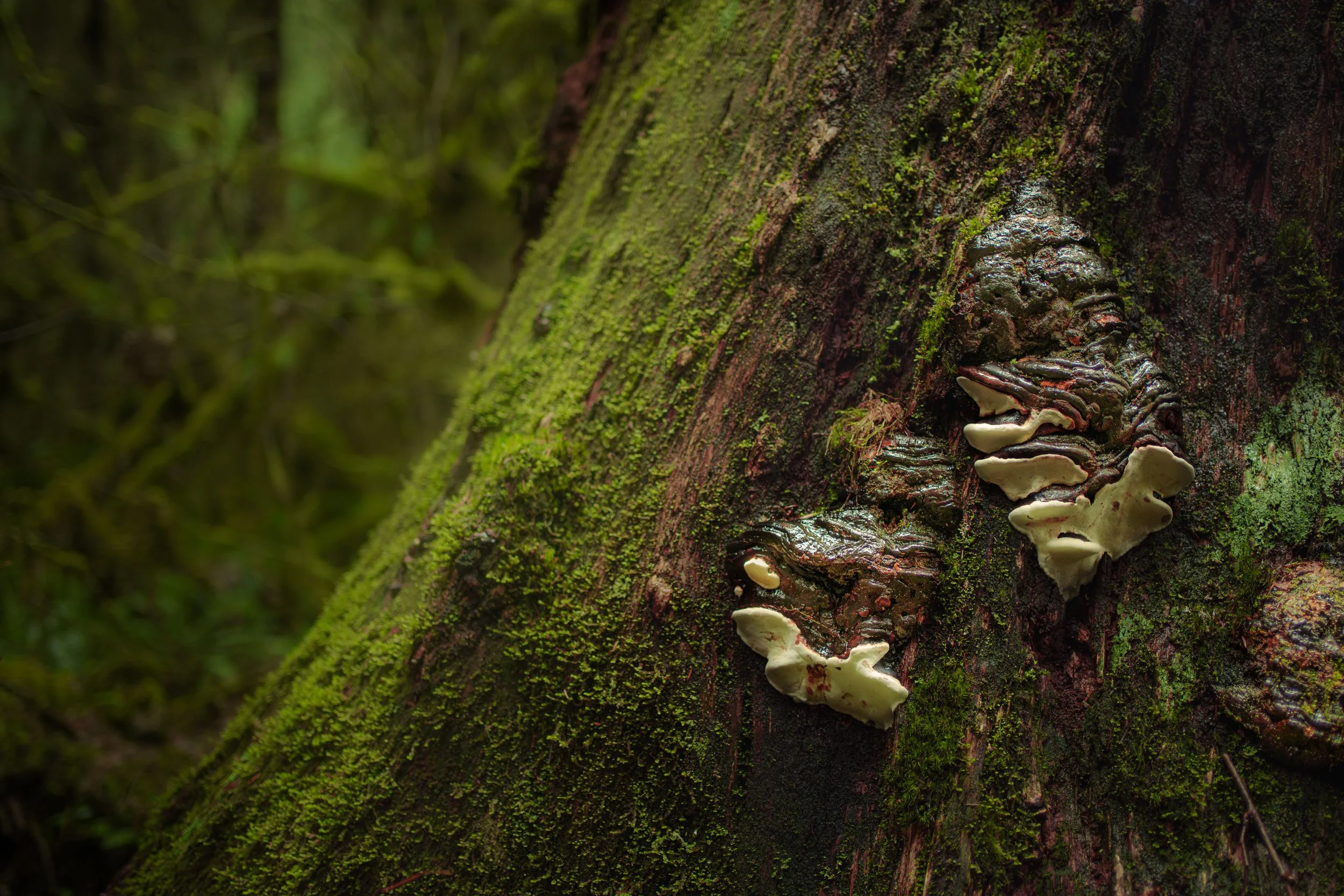
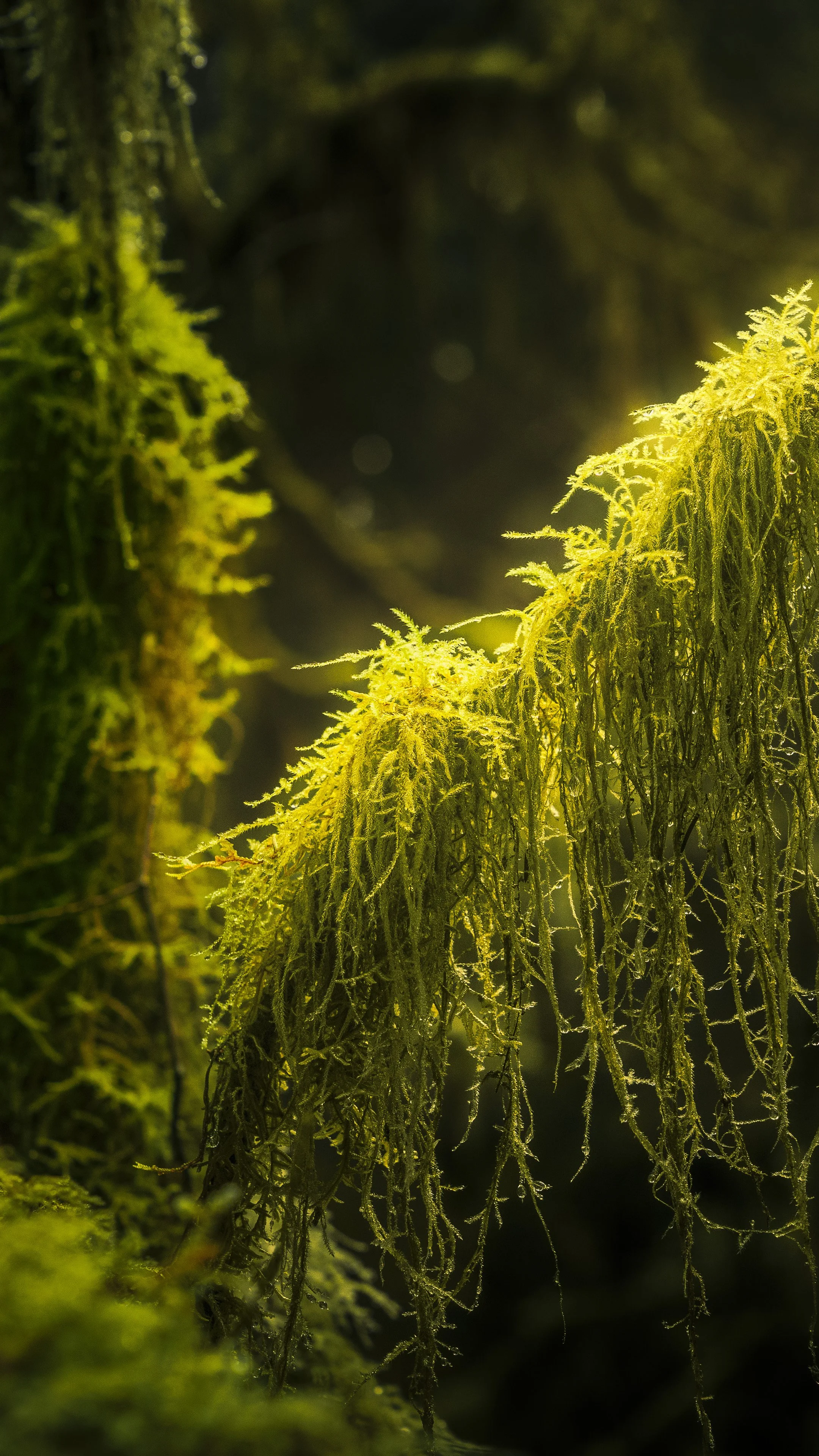
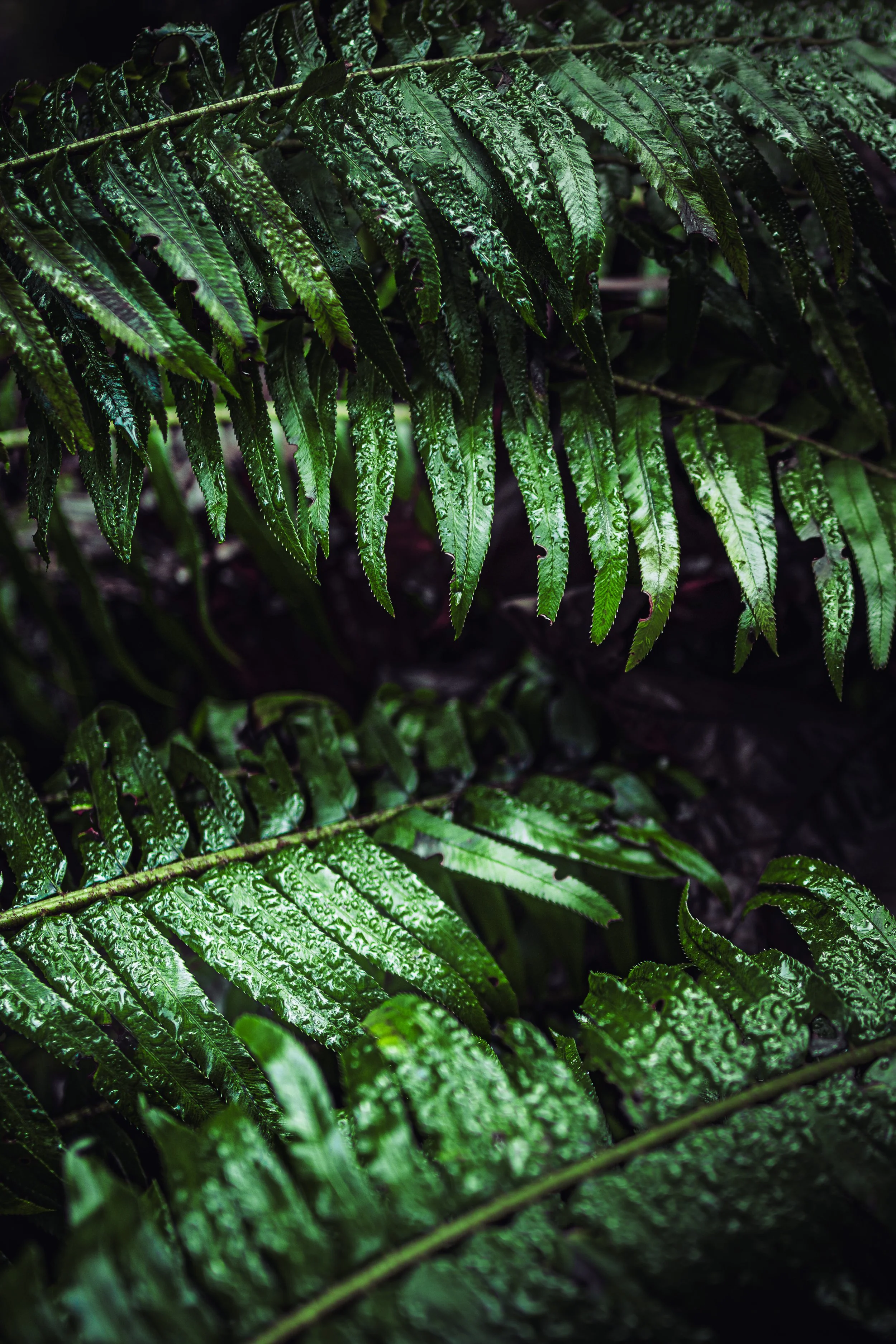
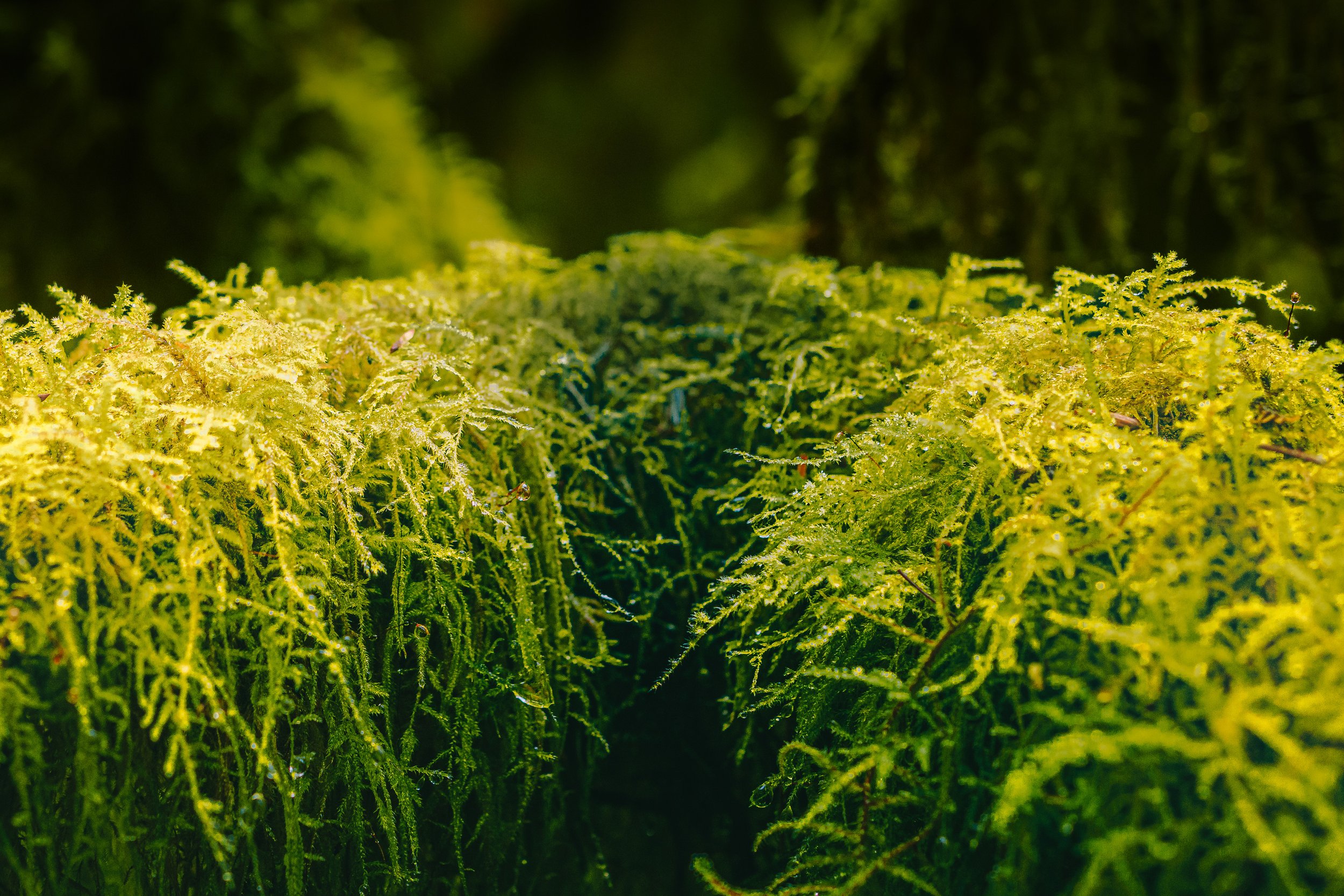
The details also seemed more honest to the afternoon I was having.
I had arrived looking for a recognizable version of the Hoh Rain Forest: large trees, dark atmosphere, curtains of moss and perhaps a bit of mist to hold everything together. Those things were present, except for the cooperative mist. But trying to force all of them into the same frame wasn’t producing the strongest photographs.
The quieter pictures asked less of the forest.
They didn’t need the entire landscape to organize itself. They only needed one fern, one patch of moss or one cluster of fungi to hold still long enough for me to pay attention.
That became the useful lesson from the outing. When the subject I came for didn’t cooperate, I didn’t necessarily need to find a different subject. I needed to reconsider its scale.
What came home with me
The trip eventually changed the lenses I carried.
I later added a 16–35mm and a 28–70mm to my kit because I wanted more flexibility in places like this, especially beneath a dense canopy where I might need to work wider. The 35mm had handled much of the afternoon, but the experience showed me where the gaps were.
Still, I don’t think another lens would have persuaded the forest to simplify itself.
A wider view can include more, but including more was already part of the problem. The more important adjustment happened when I stopped treating the grand scene as the only possible story.
On the way through the Hall of Mosses, I kept looking for a photograph that would explain what it felt like to stand inside the Hoh Rain Forest. I’m not sure one photograph could have done that. The place was too layered, too crowded and too indifferent to the edges of my frame.
The smaller pictures came closer.
Not because they showed everything, but because they admitted they couldn’t.
Fallen timber and moving water offered a smaller version of the rainforest’s larger cycle of growth and decay.
Sony A7V FE 35mm 0.6sec ƒ/5 ISO 200