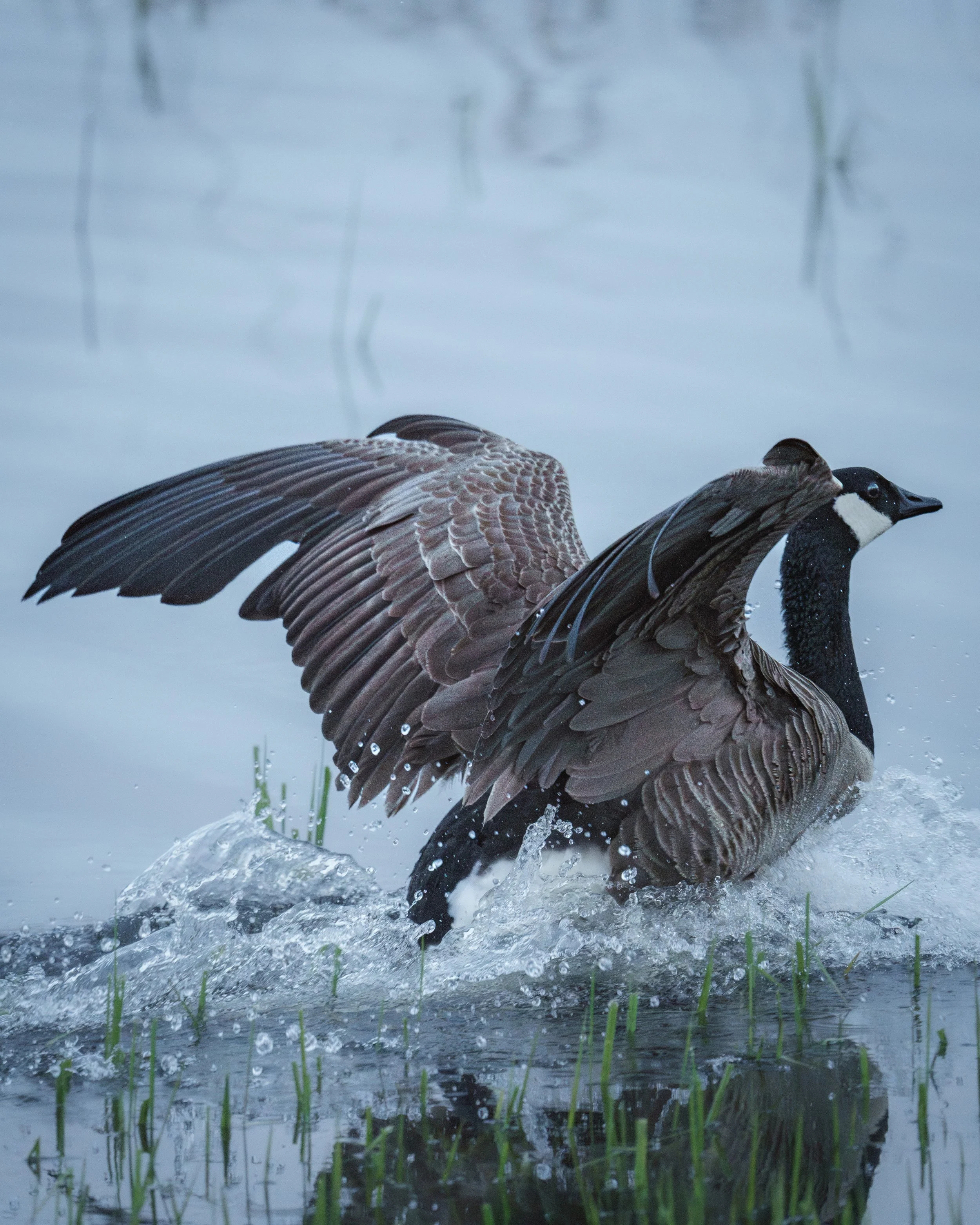
One of the few fighting-goose frames in which the focus, shutter speed, and bird briefly agreed.
I arrived at Billy Frank Jr. Nisqually National Wildlife Refuge about 90 minutes before sunrise.
The gate opens at sunrise.
This left me with plenty of time to consider the value of checking operating hours before leaving home, followed by an unplanned visit to a nearby gas station parking lot. Apparently, it’s possible to be too early for early-morning wildlife photography.
I’d driven past the refuge many times on the way to somewhere else. It sits right beside Interstate 5, close enough to be familiar without my ever having stopped. On this April morning, I finally had time set aside to find out what I’d been passing.
The forecast called for partly clear skies. I’d pictured enough of an opening in the clouds to get some sunrise light across the wetlands.
That opening never arrived. At least, not at sunrise.
A dark start and one missing piece
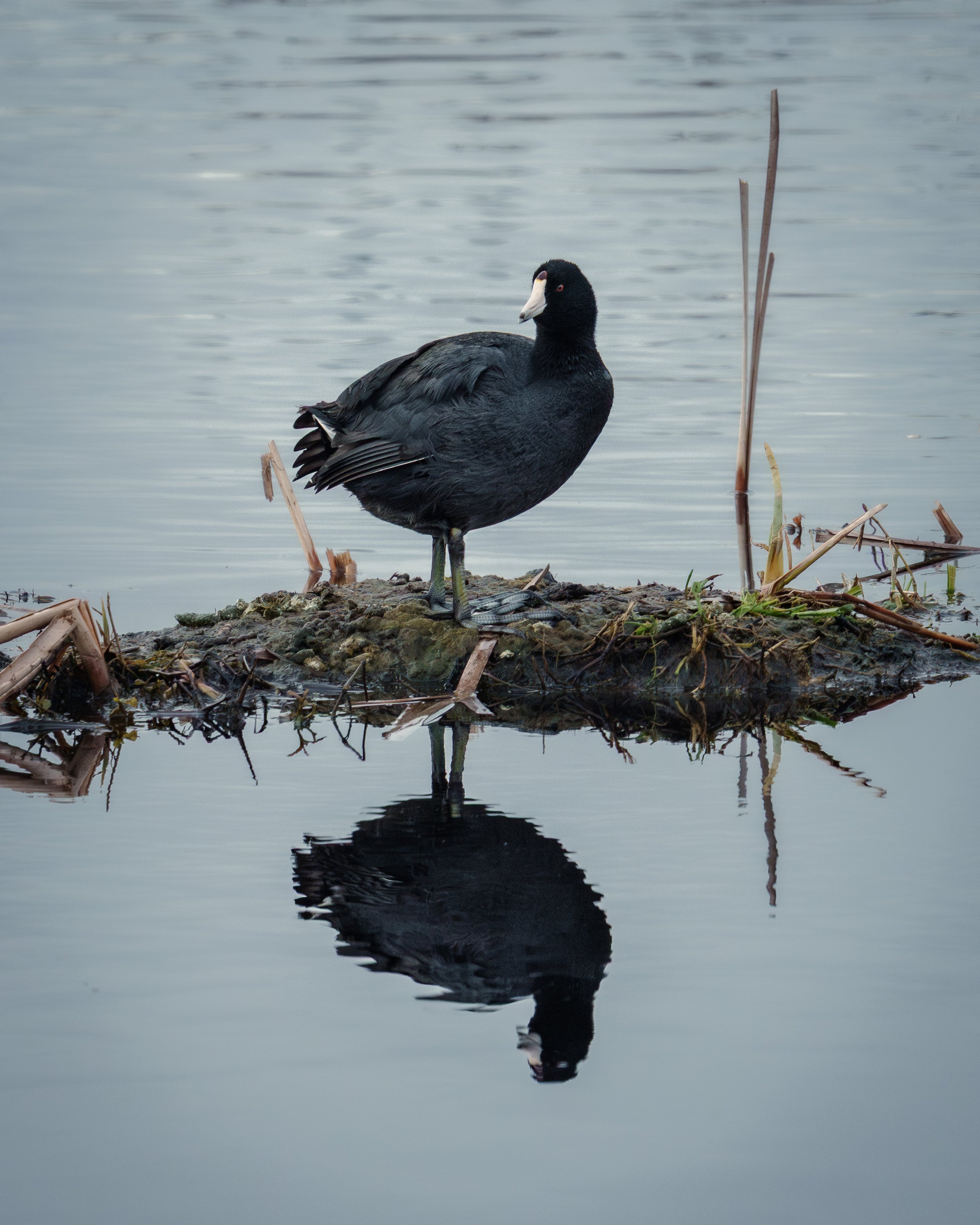
With the expected sunrise hidden by clouds, the morning began in muted color and reflections.
By the time the gate opened, the refuge was accessible but the expected light wasn’t. Clouds kept the morning darker than I’d planned for, which immediately made the Tamron 150–500mm f/5–6.7 lens more challenging to use.
Long lenses and low light already require compromises. Long lenses, low light, and moving birds require several compromises at once.
I’d also forgotten the correct mount for my monopod. That part was entirely my contribution.
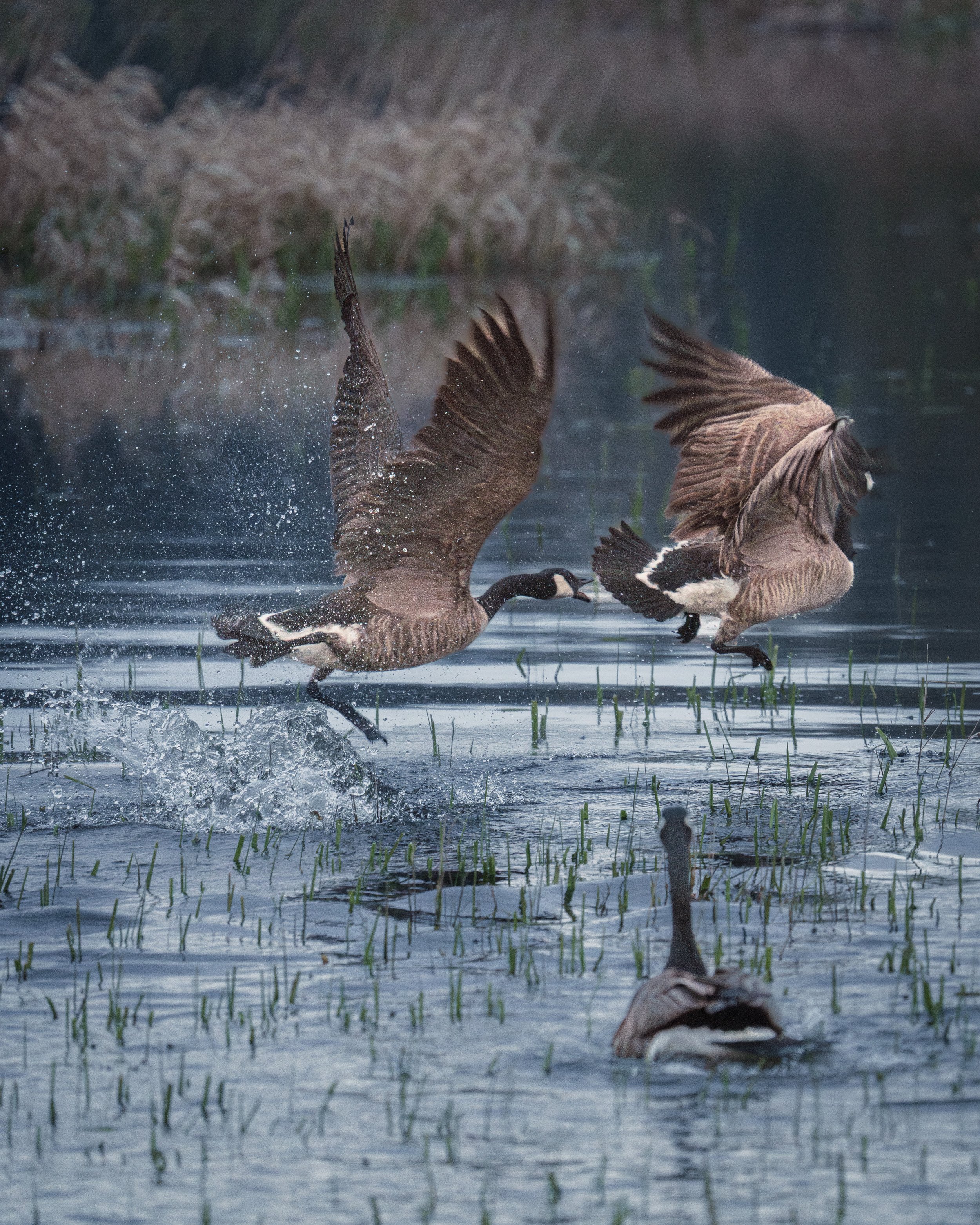
Instead of having the extra support I’d planned to use, I had to handhold the lens for the entire walk. I raised the ISO to keep shutter speeds fast enough for moving wildlife. One of the frames of the geese fighting was made at ISO 1600. Slowing the shutter wasn’t much of an alternative unless I wanted a carefully exposed photograph of a bird-shaped blur.
I still produced plenty of those.
The autofocus added another problem. It was slow enough that reeds and grass frequently became the sharpest subjects in the frame while the bird I wanted went about its business somewhere behind them. Between the lack of monopod support, the dark conditions, moving subjects, and missed focus, a lot of the photographs didn’t work.
This was partially an equipment problem and partially an operator-who-left-a-useful-piece-at-home problem. Wildlife photography is generous that way. There is usually enough blame to go around.
The freeway never quite disappeared
The refuge looked like the kind of place that ought to sound quiet.
It didn’t.
I-5 maintained a low rumble throughout the morning. I could walk farther along the trail, deeper into the wetlands, and eventually out over the estuary, but the sound stayed with me. It wasn’t always intrusive, but it was always present.
That contradiction became one of the morning’s surprises. In the photographs, the water looks still. Birds stand in their reflections. A heron rests against a soft, dark background. None of the images contains any evidence that thousands of vehicles are passing nearby.
The wildlife didn’t seem concerned with maintaining the illusion.
The geese begin their program
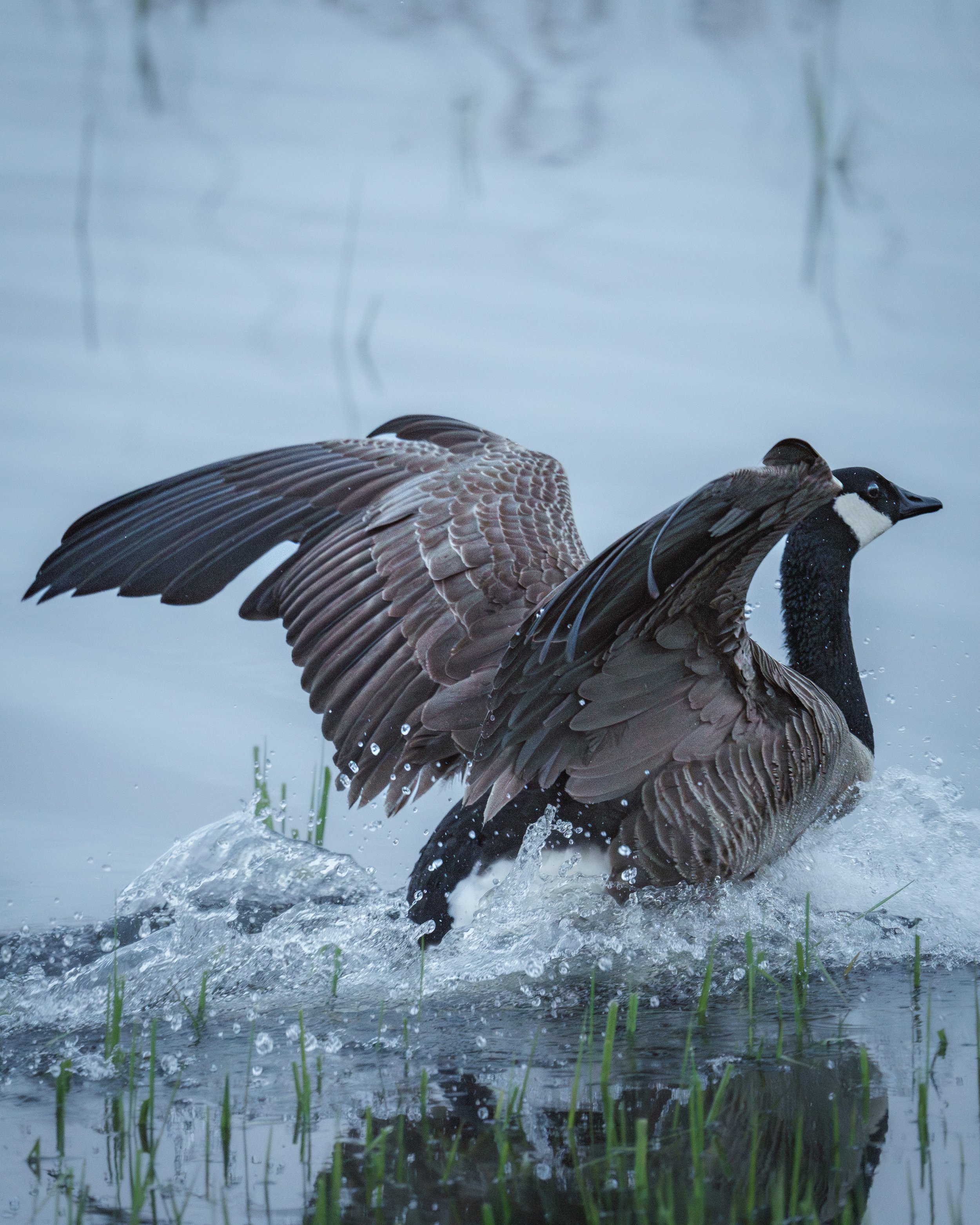
The Canada geese were active early. Not merely swimming around or standing decoratively in the wetland, either. They splashed, chased one another, spread their wings, and fought.
They were the morning’s entertainment.
Photographically, their behavior was both a gift and a problem. The splashing water and open wings gave me the kind of action I wanted, but the same movement magnified every difficulty created by the low light and slow autofocus. I had to keep the shutter speed up, accept the higher ISO, and hope the focus stayed with a goose instead of wandering off to examine the vegetation.
A lot of attempts failed. A few didn’t.
The strongest photographs from the morning came from those geese. One frame shows several birds colliding in a mess of wings and water. Another isolates a goose pushing through the shallows with its wings spread and water rising around it.
I had gone to Nisqually hoping for sunrise light and perhaps a bald eagle. Instead, familiar Canada geese were doing all the work.
The ducks took a quieter approach. They mostly did their own thing, moving through water that still looked cold and gray. Later, when the clouds finally opened, the light caught their feathers and brought out colors that had been nearly invisible earlier.
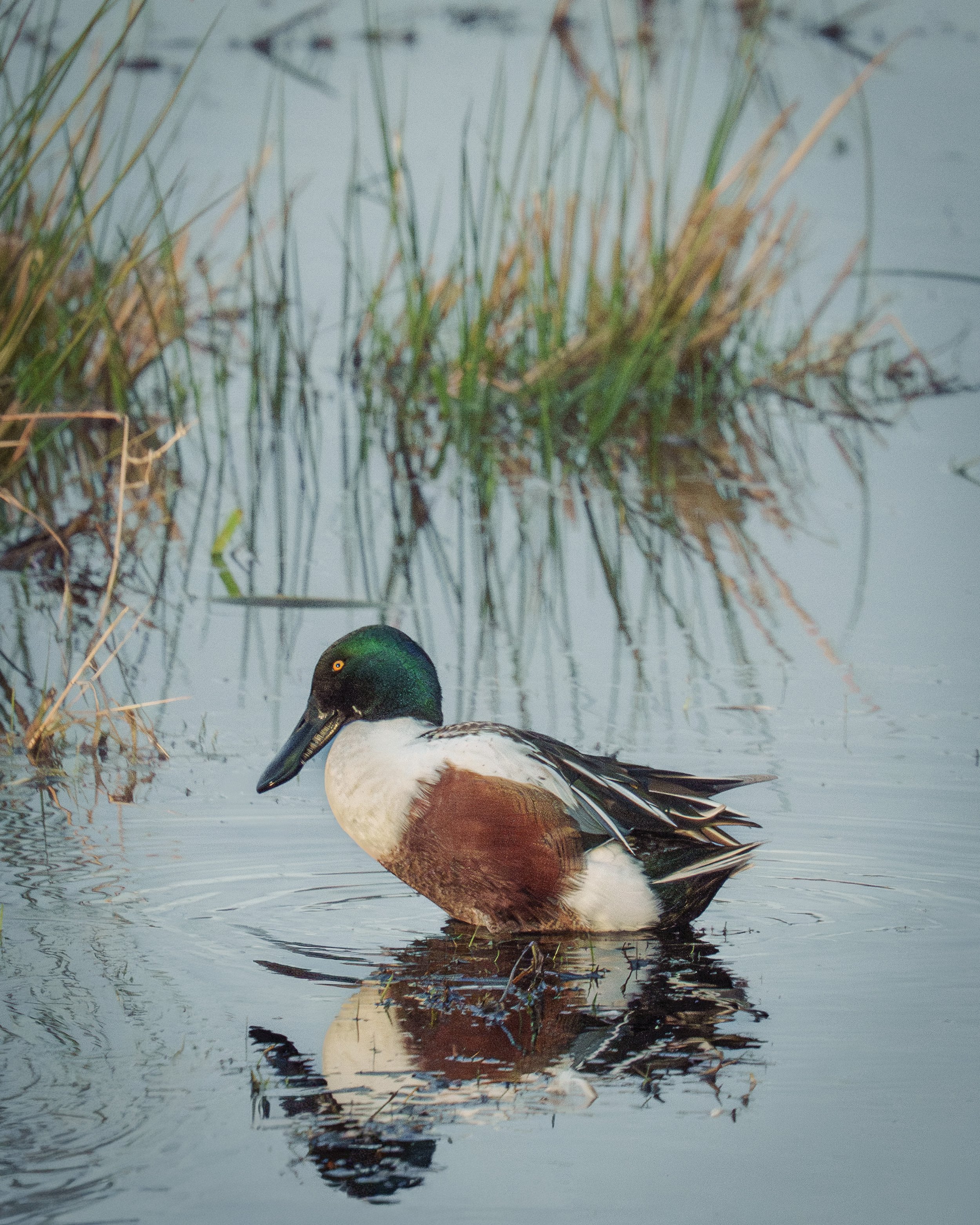
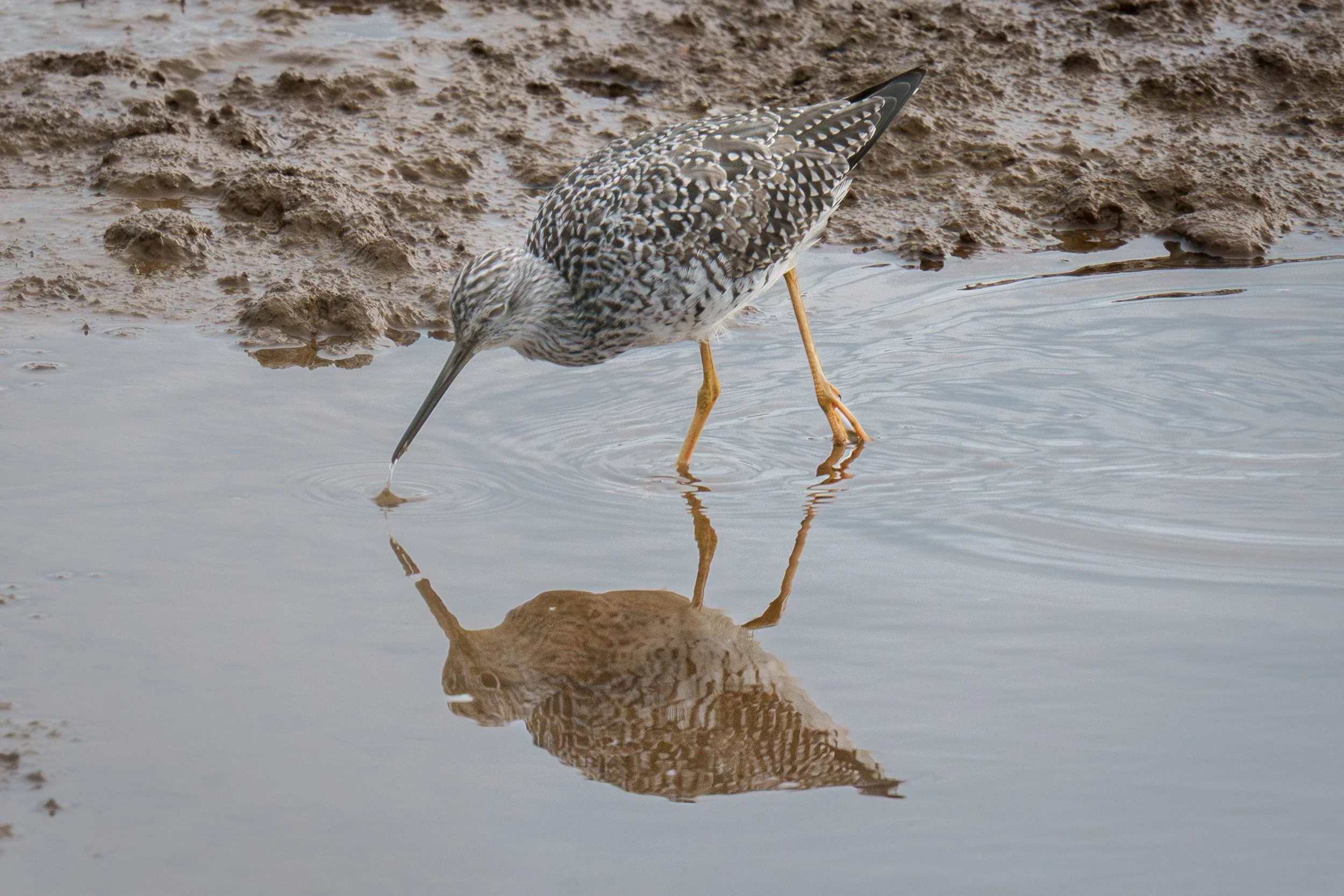
The change wasn’t dramatic enough to rescue every technical problem, but it altered the wetland. Dark birds gained green, rust, and white. Reflections warmed. The morning began to look more like the one the forecast had suggested.
It had simply ignored the scheduled start time.
Photography as a group effort
A harbor seal rests along the estuary after the morning light finally breaks through.
There were plenty of other photographers on the trails and boardwalk. We compared setups, talked about Sony and Canon cameras, and complimented one another’s gear choices with the usual friendly loyalties intact.
More importantly, people shared what they had seen.
Photographers pointed out interesting wildlife farther along the route and mentioned birds sitting directly on the boardwalk. Someone had photographed a giant bald eagle. Those conversations created a loose network of sightings, passed backward and forward along the trail.
I eventually saw huge bald eagles in the distance. By the time I made my way closer to the location along the boardwalk, they were gone.
That is the efficient version of a wildlife photography lesson: someone tells you about an extraordinary bird, you carry a large lens toward it, and the bird leaves.
The boardwalk still produced an unexpected encounter. Harbor seals were resting along the estuary, basking once the morning light appeared. Farther away, I thought I might also be seeing sea lions, although at that distance they could have been particularly large harbor seals. I couldn’t confirm the identification, so “large shapes enjoying the sun” is as precise as I can honestly be.
The big birds at the end
Photographers returning along the gravel path pointed out Great Blue Herons perched in the distant field.
I walked to the end of the boardwalk and then turned back.
On the return, as I backtracked along the gravel path toward the entrance, photographers were pointing out Great Blue Herons in the distant field to people just arriving. The herons were far enough away to be missed if nobody told you where to look, but once found they provided the majestic big-bird experience the departed eagles had declined to supply.
One heron perched on a branch, its feathers slightly disordered and its long body compressed into a patient shape. It wasn’t doing anything dramatic. After the splashing geese and the failed pursuit of eagles, it didn’t need to.
The photograph works because the bird is still. The background falls away, the light is subdued, and the heron seems entirely unconcerned with photographers, camera brands, autofocus performance, or whether I remembered all the parts of my monopod.
What the morning gave me
The outing contained a bit of everything.
I was technically frustrated. Too many photographs were blurred or focused on grass. The lens struggled in the conditions, and forgetting the monopod mount made those conditions harder than they needed to be.
I also saw more than enough to make the walk worthwhile: active geese, ducks beginning to shine when the light arrived, an American Coot running across the water, distant bald eagles, a harbor seal resting in the estuary, and Great Blue Herons waiting near the end of the morning.
The freeway never stopped rumbling. The sunrise never appeared. The eagles left before I reached them.
And the geese put on a better show than anything I had planned.
I’ll photograph Nisqually again. Next time, I’ll check the gate hours, bring the correct monopod mount, and arrive with a better understanding of what the lens can and cannot do in poor light.
I’ll also pay attention to the geese.
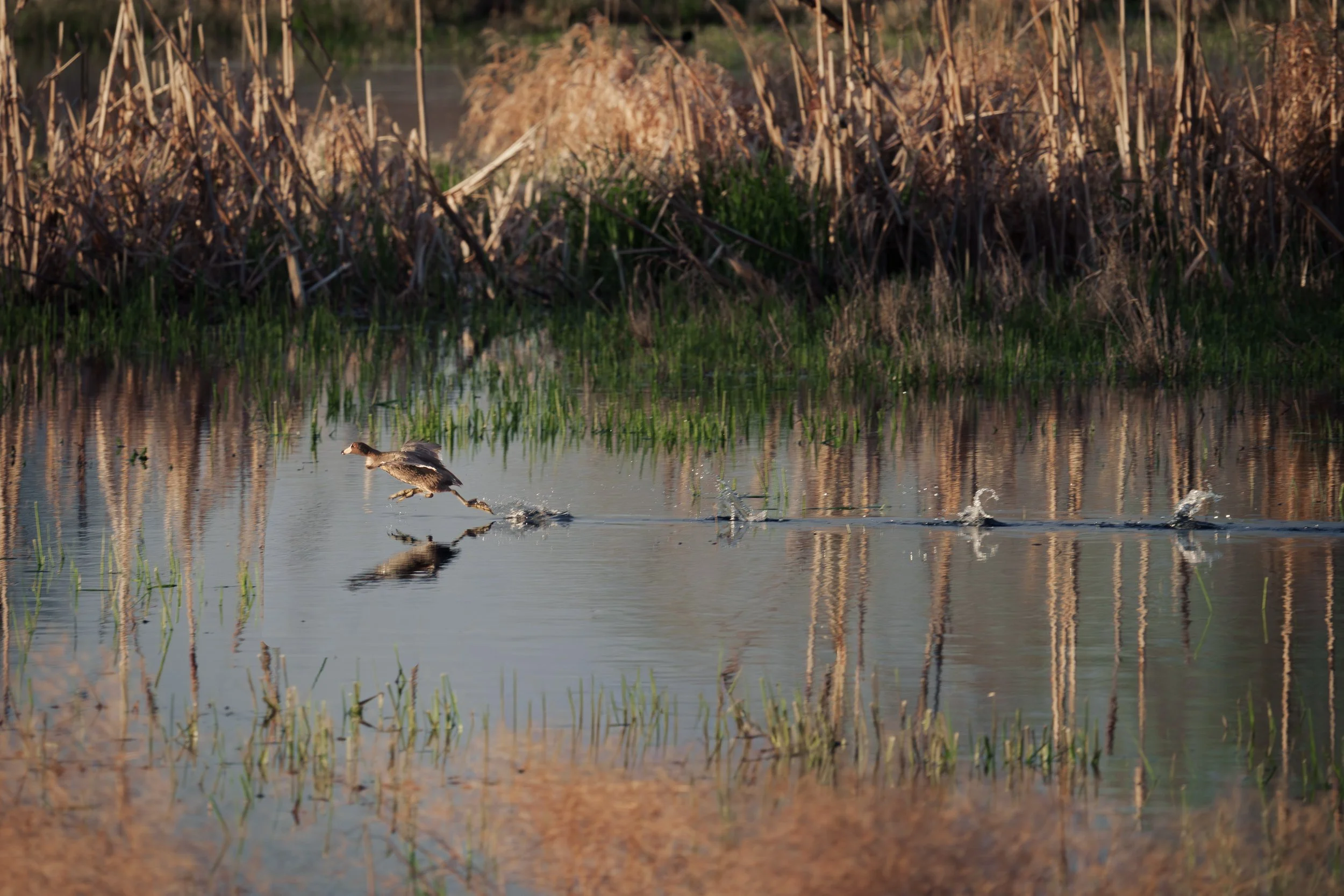
An American Coot runs across the wetland as the morning begins to gather energy.