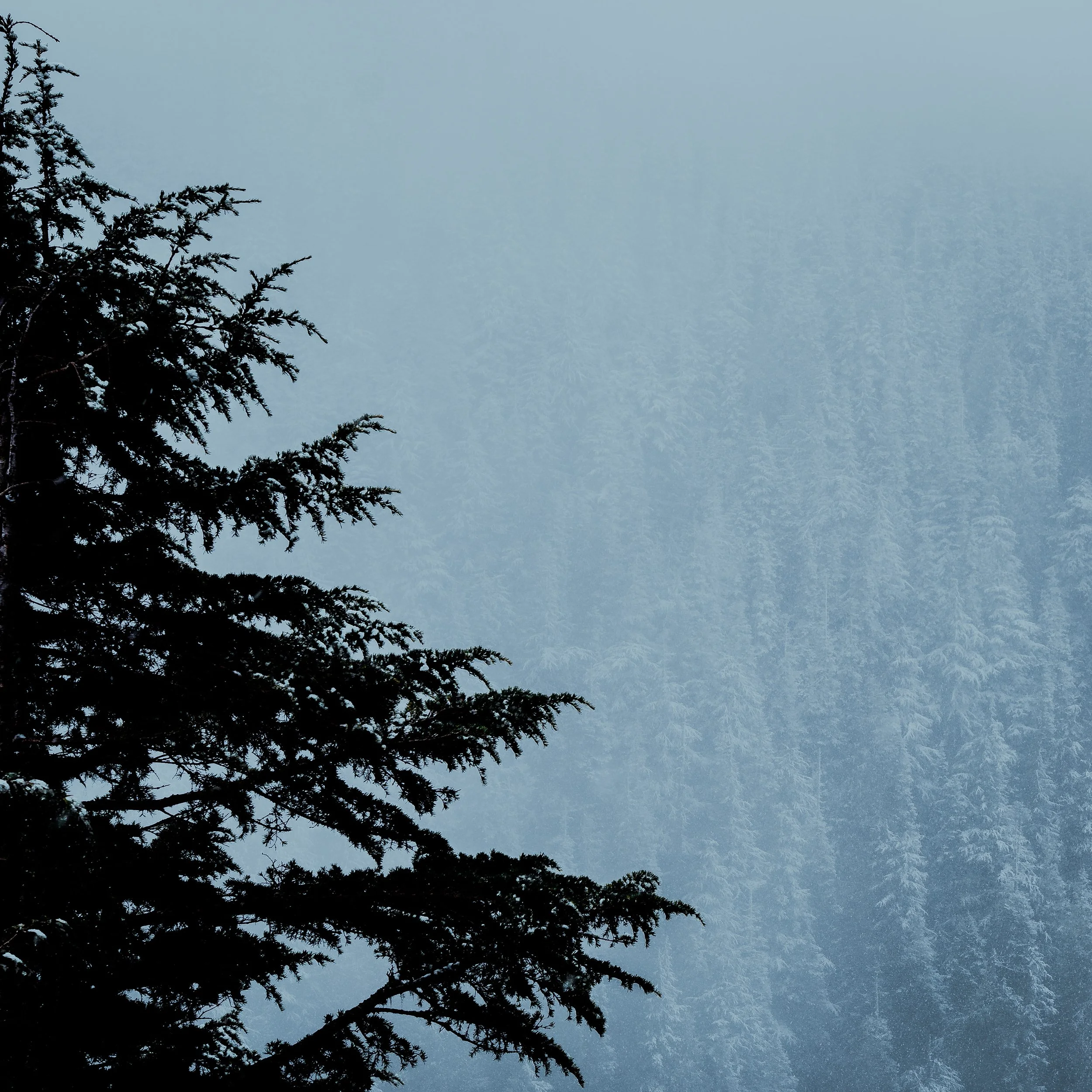
I was leaning over a railing at Narada Falls, trying to handhold a long exposure while snow fell around me and tourists gathered at the viewpoint.
This hadn’t been the plan.
The plan was to learn how to photograph the Milky Way. I had signed up for a May night-photography outing through a Facebook photography group, and the original destination was Hurricane Ridge in the Olympic Mountains. By the time the outing arrived, the location had been moved to a dark rural area north of Richland.
I thought the replacement location would be the safe bet.
The weather had other ideas.
A little extra time
I left early enough to make a detour through Mount Rainier National Park. I had extra time, my camera was with me, and stopping at the park seemed better than arriving early and waiting around somewhere east of the Cascades.
What I hadn’t brought was winter clothing.
It was May. I had a light jacket, a beanie, and a pair of my wife’s gloves. Unfortunately, owning access to a pair of gloves isn’t the same as being able to wear them. They didn’t fit.
Then it started to snow.
I could have stayed in the car. That would have been the sensible response, especially considering that my night-photography outing hadn’t even begun. Instead, I got out and started photographing.
Across the valley, the forest was disappearing into the weather. Snow collected on the trees while the higher slopes faded behind a pale blue-gray curtain. The remaining green in the branches made the white feel even colder.
Those photographs became some of my favorites from the trip.
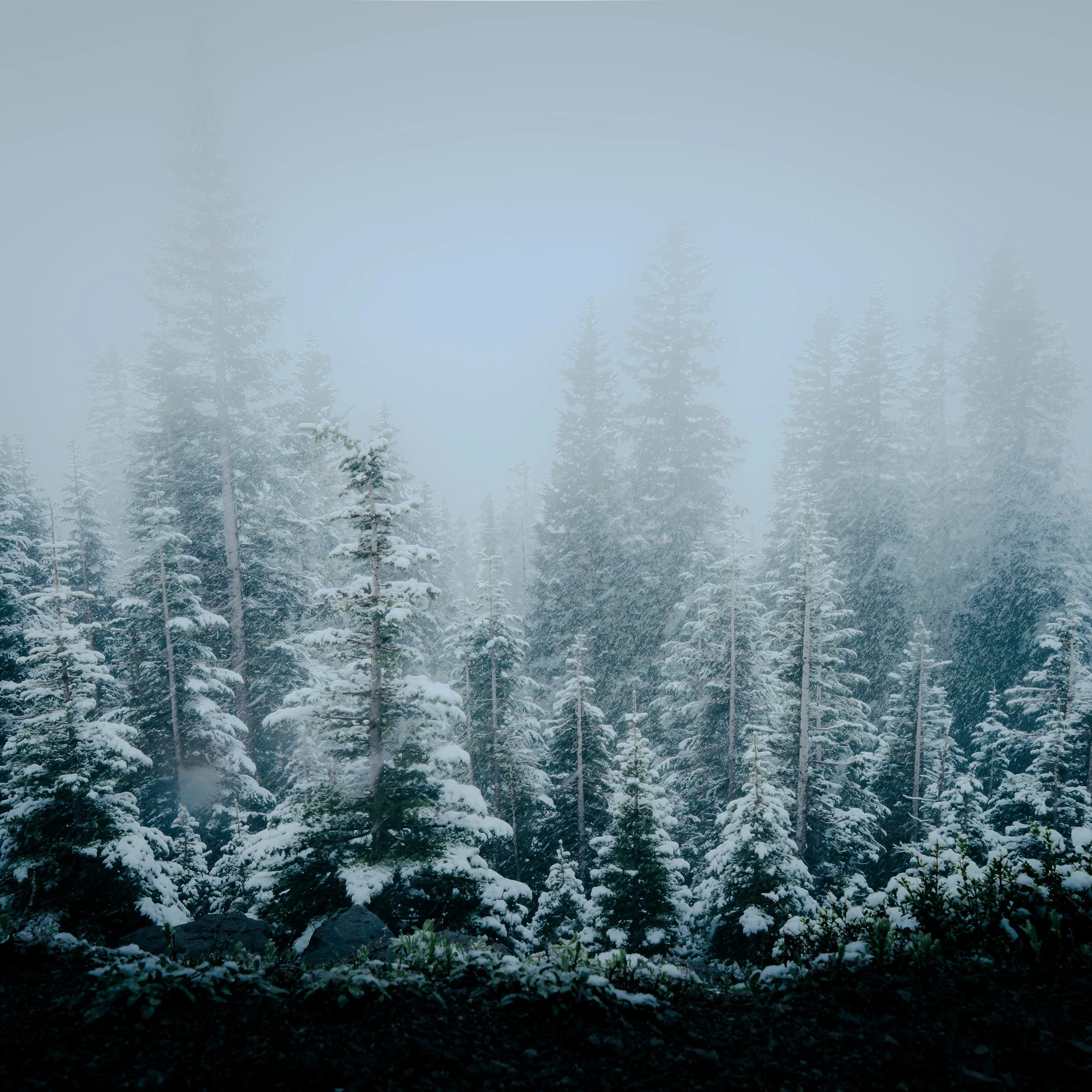
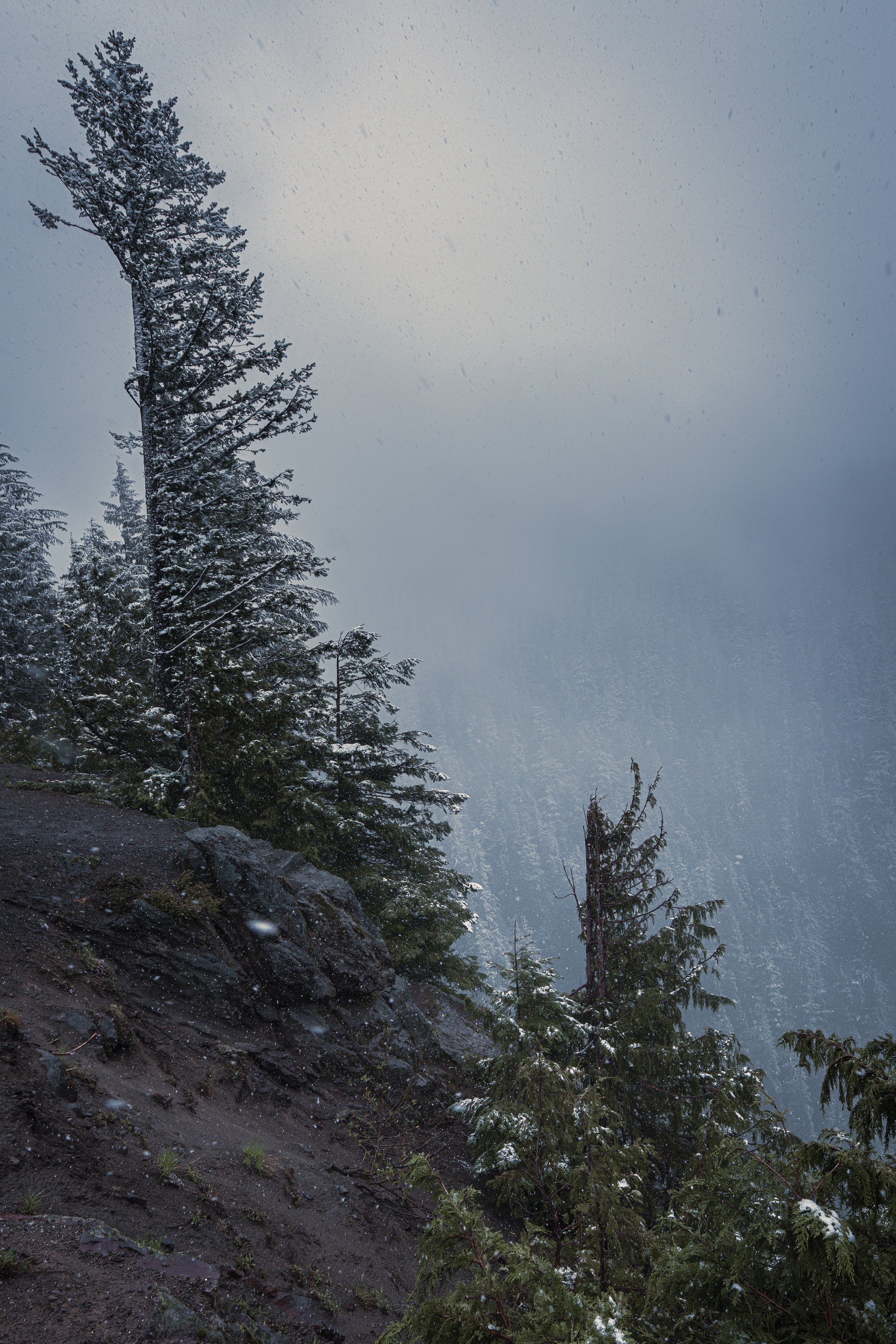
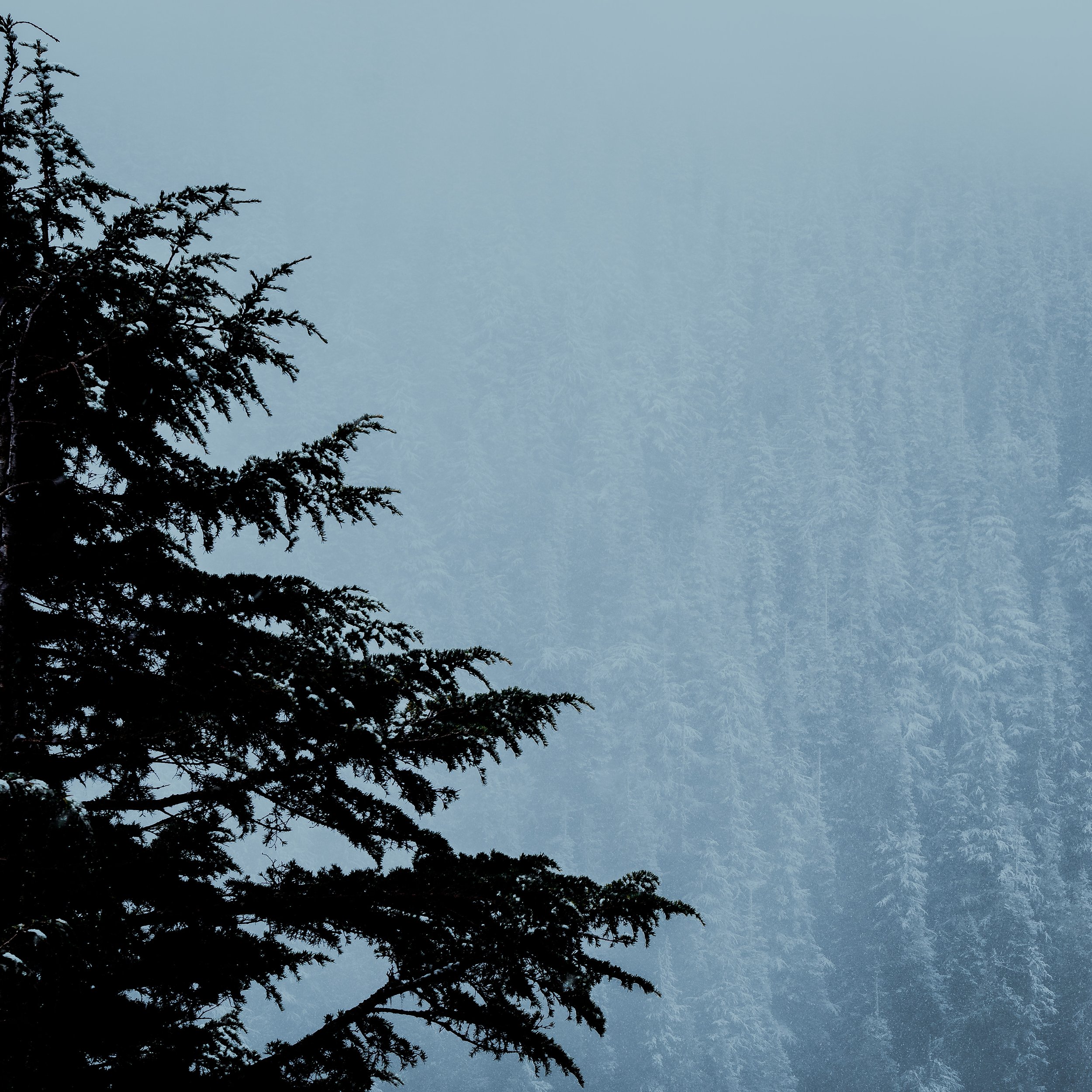
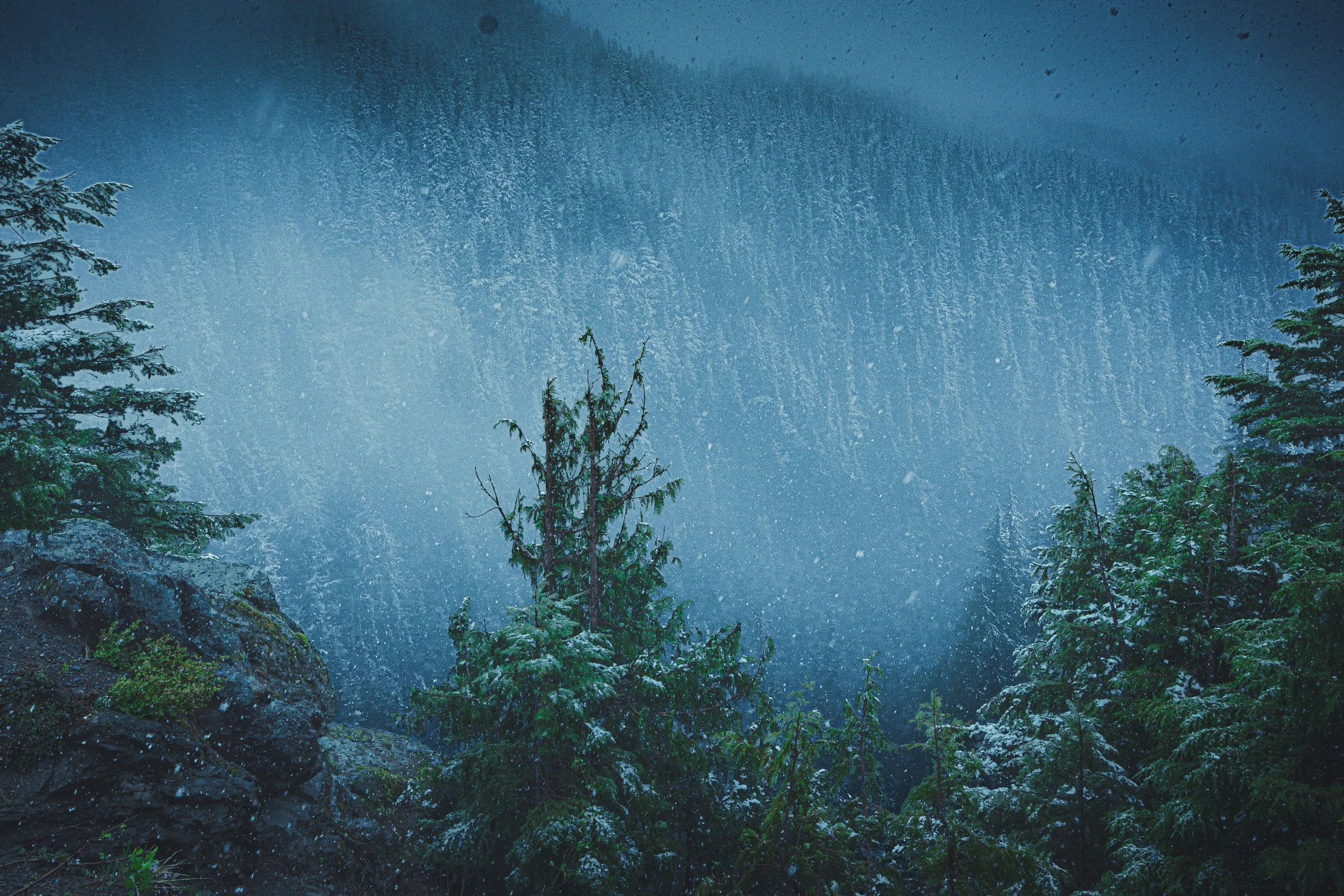
They weren’t photographs of Mount Rainier in the familiar sense. The mountain wasn’t standing above the landscape waiting to have its portrait taken. Most of the distant landscape was barely visible. What interested me was the atmosphere: dark branches in the foreground, a suggestion of forest across the valley, and snow removing detail as quickly as I could photograph it.
The absence became part of the picture.
Long exposures, briefly
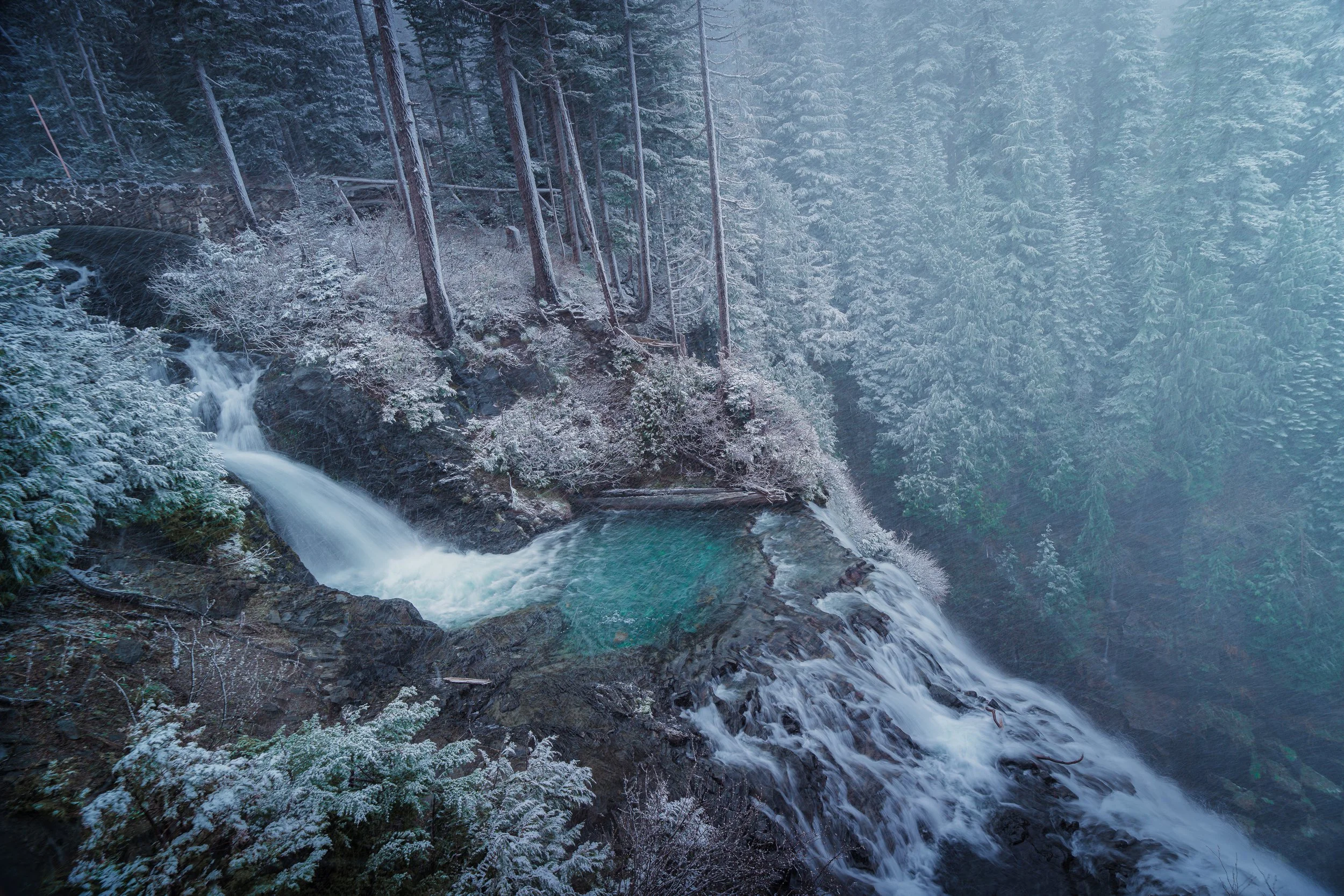
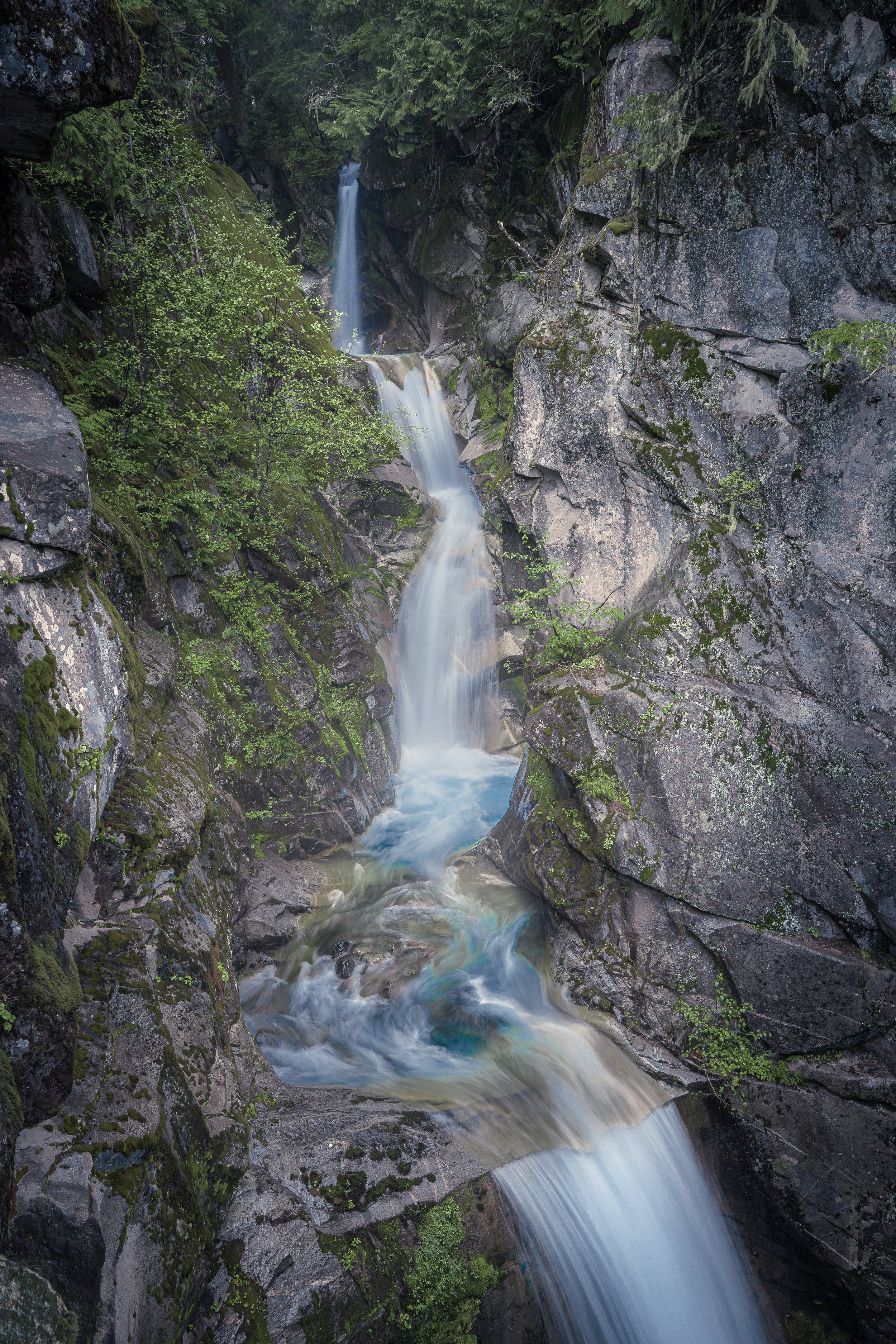
Leaning over the crowded railing gave me a view of the water dropping toward the snowy forest, although it left little room for a tripod.
At Narada Falls, I joined the tourists at the upper viewpoint. The National Park Service describes Narada Falls as the largest waterfall accessible by car in the park. That accessibility was useful under the circumstances. I wasn’t equipped for a snowy hike.
I leaned over the railing and tried to make a handheld long exposure of the water dropping away into the forest. Handholding and long exposure aren’t natural partners, but the perspective was worth attempting. The result became one of my favorite photographs from the trip.
Eventually, not having gloves made the decision for me. I had to stop.
That was probably overdue.
The sky I came for
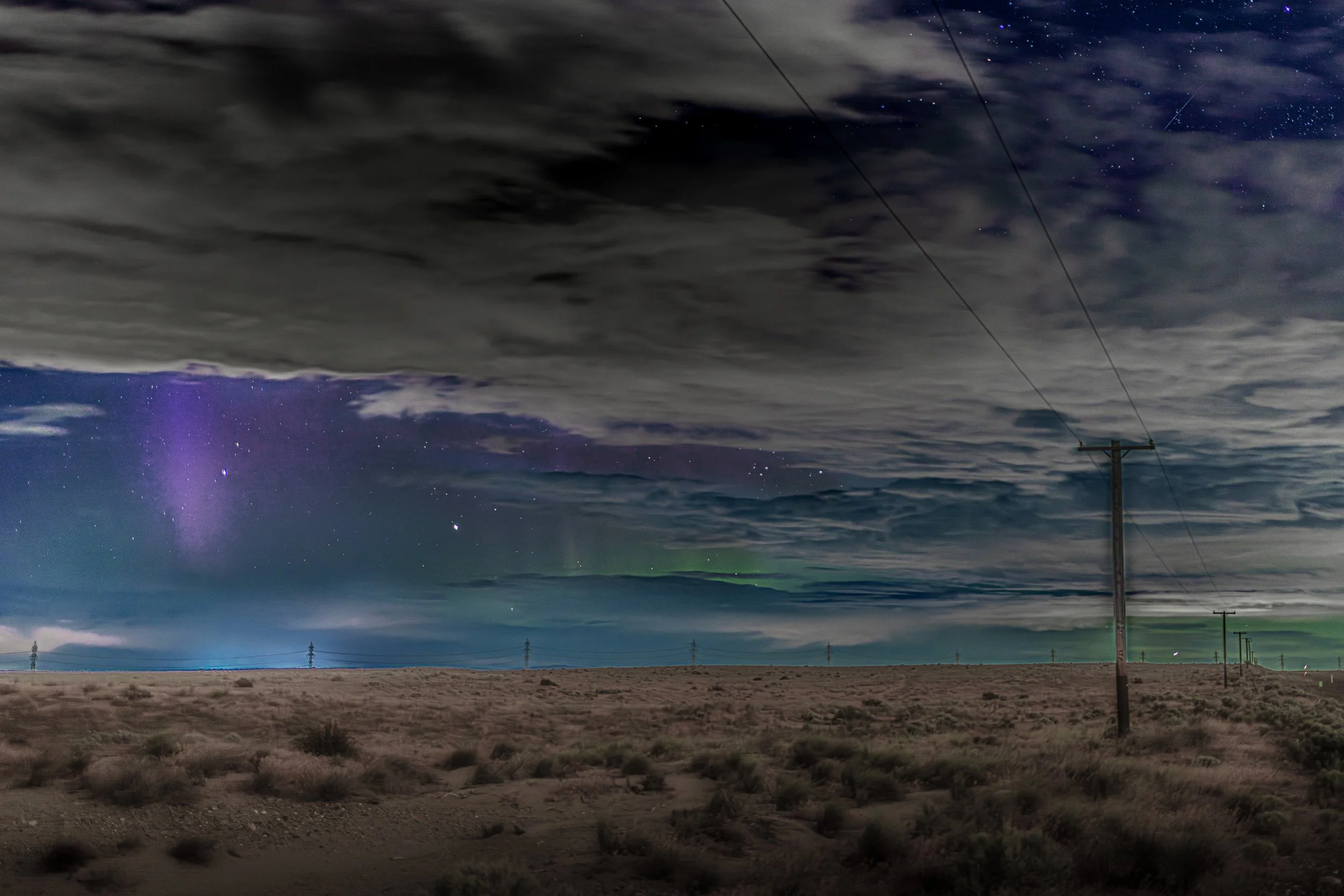
I couldn’t see an aurora with my eyes. The green and purple near the horizon appeared only after the camera completed the exposure.
From Mount Rainier, I continued toward the night-photography location off Route 4S north of Richland.
I had never attempted Milky Way photography. I was there to learn the practical parts: how to choose an ISO, how long to expose without losing the stars to movement, how to focus and compose in darkness, and what to look for when most of the scene isn’t visible in the usual way.
By then, I had already driven through a spring snowstorm to attend an outing that had been moved from the Olympic Mountains to Eastern Washington. I thought I had used up the trip’s supply of uncertain weather.
I had not.
Clouds covered most of the sky. The Milky Way never became visible.
I was disappointed. The Milky Way was the reason for the trip, and the replacement location had seemed like our better chance of finding a clear sky. Instead, I was standing in a dark rural landscape looking at clouds.
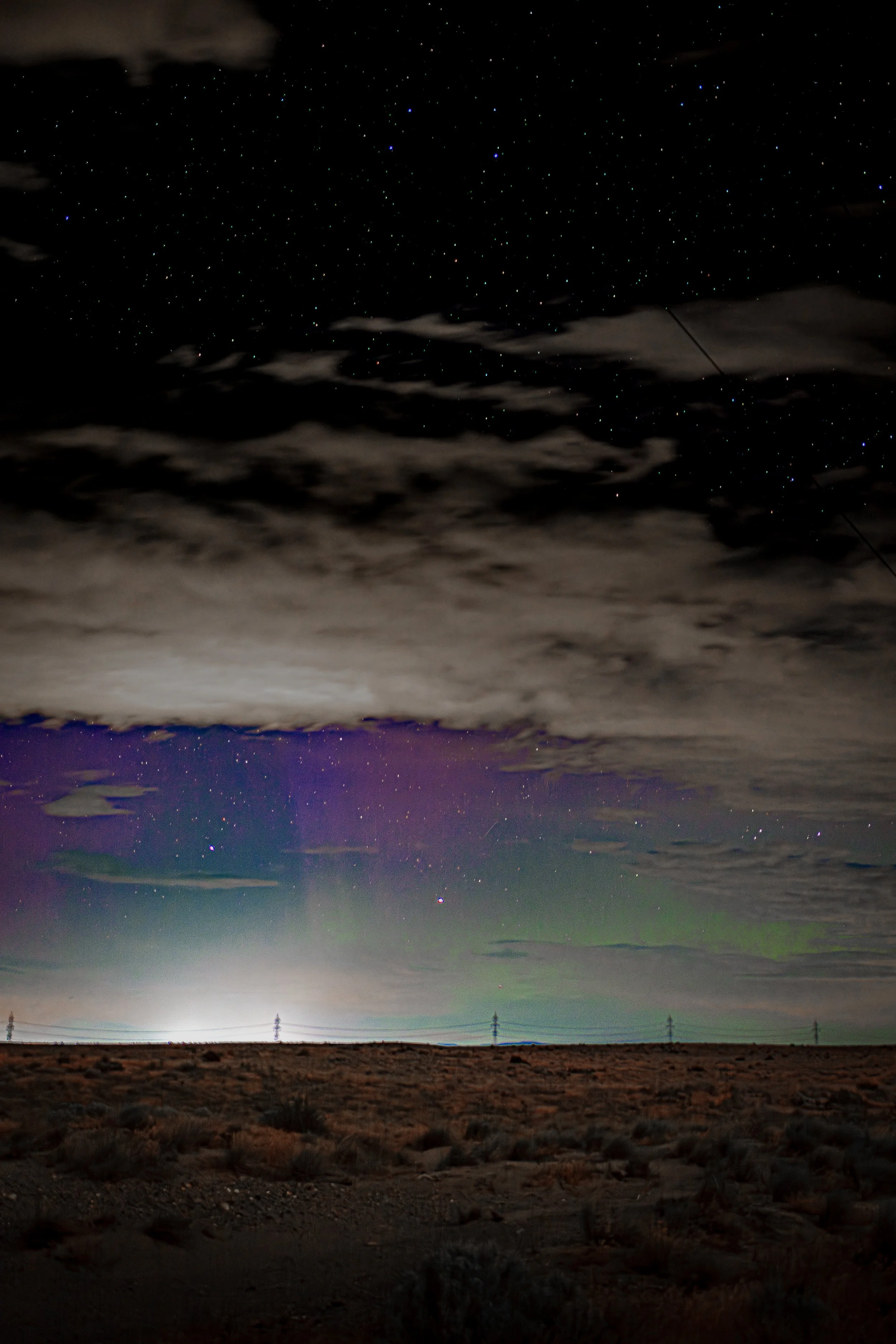
There was an aurora that night too, but I couldn’t see it with my eyes. It only appeared after I made a photograph and looked at the camera. Faint green and purple color sat near the horizon, slipping through the broken cloud cover.
That discovery gave me something else to work with.
The night photographs aren’t clean, unobstructed views of the heavens. Power poles and transmission structures cross the landscape. Clouds occupy more of some frames than stars. The aurora is partial and subdued rather than the great curtain of color I might have imagined.
They’re honest photographs of the night we had.
I kept experimenting. I could change the ISO and exposure, look at what the camera recorded, and try again. I could see how clouds affected the light and how much foreground was needed to give the sky a setting. The camera was showing me things my eyes couldn’t see, but it still needed a composition. A sky full of stars wasn’t automatically a photograph.
I didn’t leave with the Milky Way image I had expected. I did leave with my first experience of photographing a dark sky, a few traces of an aurora, and a better understanding of what I would need to do the next time.
I also met some great people and had fun trying something unfamiliar. Disappointment and a good evening can occupy the same place. Apparently, so can clouds and an aurora.
Back into daylight
The following morning, I took my time driving home.
Along Bear Canyon, I stopped at pullouts beside the Tieton River. The light was nothing like the soft snow at Mount Rainier or the darkness north of Richland. It was hard and direct, falling on brown grass, bare and burned trees, exposed hillsides, and fast-moving water.
The broader Tieton River corridor had burned during the 2024 Retreat Fire. Official assessments describe a mixture of burn severities across the fire, with some large areas of severe damage in the southern portion. The fire also affected communities and infrastructure around Rimrock and Naches. Washington’s Department of Natural Resources documented those effects.
I didn’t try to identify which individual trees had burned in that particular fire. What I could see from the pullouts was a landscape marked by fire: blackened trunks, open areas where the forest had thinned, and new spring color appearing among the brown.
The harsh light wasn’t what I would have chosen for a landscape photograph. But by then, choosing the conditions had stopped being part of the trip.
The Tieton River gave the photographs a path through the canyon. In one frame, it runs toward a red bridge beneath the hills. In another, the river leads between fire-marked trees and slopes divided by sunlight and shadow.
They were completely different from the photographs I had made the day before. That difference is what made them belong.
What appeared instead
I went to Eastern Washington to learn how to photograph the Milky Way.
I started learning that. I learned how much preparation goes into photographing a subject that may never appear, how the camera can record color that my eyes can’t see, and how important the landscape remains even when the sky is supposed to be the subject.
But the trip also became a record of changing conditions.
Snow turned a spare-time detour into one of the most productive parts of the trip. Clouds hid the Milky Way but allowed pieces of the aurora and stars to show through. Harsh daylight revealed a canyon still carrying evidence of fire.
None of those conditions produced the photograph I had planned before leaving home.
That no longer feels like the measure of the trip.
I came back with a waterfall photograph made while leaning over a railing, snowy forests that looked almost monochromatic until the green showed through, my first attempts at photographing an aurora I couldn’t see, and a final stretch of river running through a damaged landscape.
I also came back knowing more about night photography than I did when I left.
Next time, I’ll still hope for a clear view of the Milky Way.
I’ll also bring my own gloves.